
Toowoomba's Local Landscaping Team
Japanese Garden Design in Toowoomba
Japanese garden design in Toowoomba & the Darling Downs. Calm, balanced, low-maintenance gardens with timeless style.
- Servicing All of Toowoomba
- Free Design Consultations
- Mon–Sat, 7am–5pm
There's a particular kind of tired that no weekend ever seems to fix. You pull into the driveway on a Friday evening, the week still rattling around in your head, and the last thing your backyard offers is a moment's peace. It's just another job on the list.
Now step out the back door into something else entirely — gravel raked into slow, even lines, a single weathered stone resting exactly where it should, the quiet trickle of water just out of sight. Your shoulders drop. That feeling is the whole point of Japanese garden design, and it's what we create for homeowners across Toowoomba.
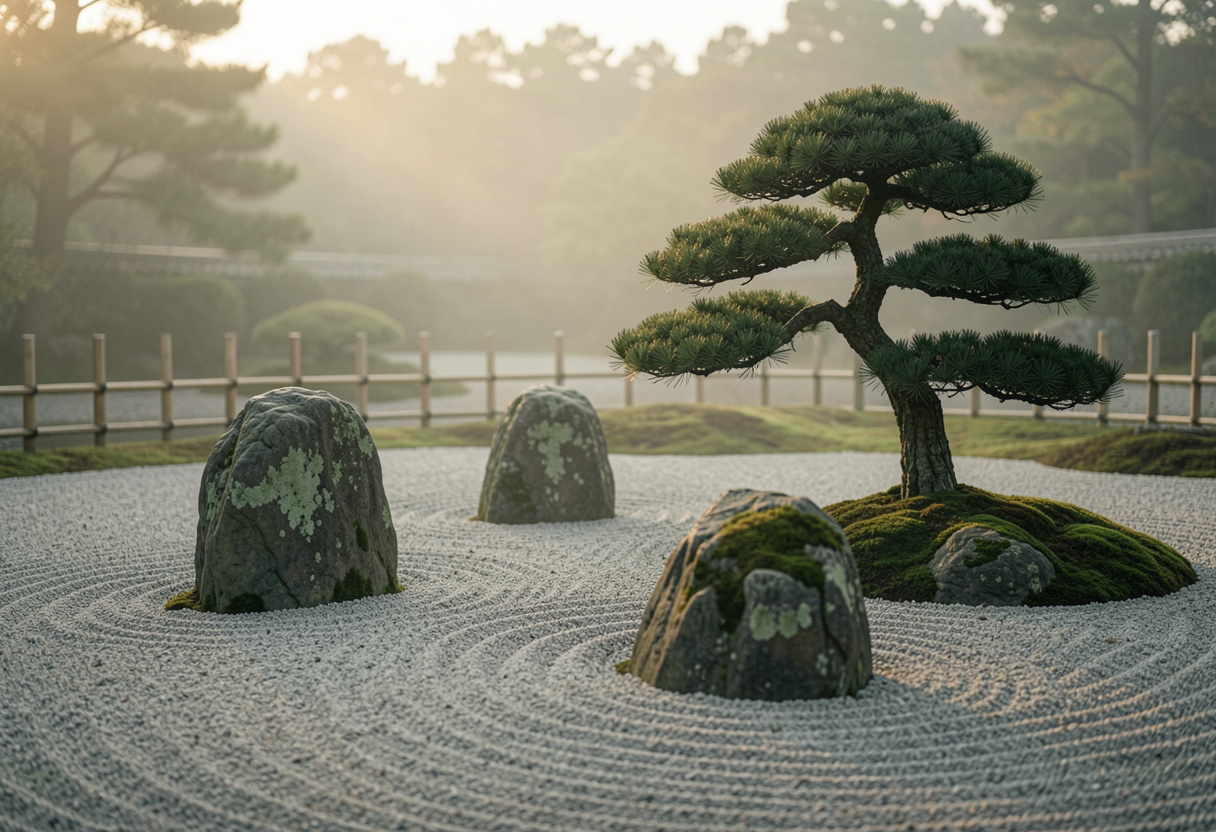
A Japanese garden was never about cramming in colour or showing off. It's nature distilled down to its calmest, most balanced form — a retreat you can walk into after a long day and actually breathe. For busy families and professionals who want their patch of the Darling Downs to feel like a sanctuary instead of another chore, few styles do it better.
We design and install authentic Japanese-style gardens across Toowoomba and the wider Darling Downs — from Rangeville and Middle Ridge through to Centenary Heights, Kearneys Spring and the towns beyond. Our work is grounded in the real principles of the tradition, not a rock-and-a-lantern imitation, and it's shaped to suit our region's frosts, dry summers and soil. The result is a calm, contemplative space that looks like it's always belonged there.
The Foundations
The Principles Behind Japanese Garden Design
Anyone can drop a stone lantern next to a maple and call it a Japanese garden. The people who love this style can spot that a mile off. What makes a garden feel genuinely Japanese isn't the props — it's a handful of guiding ideas that have shaped these spaces for centuries. Get those right and the whole thing falls into place.
Balance Without Symmetry
A Japanese garden feels settled, but you'll rarely find two matching halves or a straight line down the middle. Balance comes from weight and placement instead — a large stone on one side answered by a cluster of low plants on the other.
Simplicity and Restraint
This is the hardest part for most people to accept, and it's the most important. A Japanese garden is defined as much by what you leave out as what you put in. One beautiful tree says more than ten competing shrubs.
The Power of Empty Space
That open stretch of raked gravel or bare moss isn't unfinished — it's doing real work. Negative space gives the eye somewhere to rest and lets the elements around it breathe.
Borrowed Scenery
A good Japanese garden doesn't pretend your boundary fence is the edge of the world. It frames what's beyond it — a distant ridgeline, a neighbour's mature gum, the escarpment views the Darling Downs is known for.
Nature Idealised, Not Copied
The goal was never to recreate a wild bush scene exactly as it grows. It's nature refined — the essence of a mountain, a stream, a forest, distilled and made peaceful.
Symbolism in Stone and Water
A carefully placed group of stones can stand for mountains. A winding path of gravel can suggest a flowing river, and a raked gravel bed can become an entire sea — no water needed.
Understanding why these gardens work, not just what they look like, is what lets us design one that still feels right years down the track. It's the difference between a space that quietly draws you in and one that never quite lands.
Elements of a Japanese Garden
Once the principles are clear, the individual pieces start to make sense — because every element in a Japanese garden earns its place. Nothing's there just to fill a gap. These are the recognised components we work with, and how each one pulls its weight.
Stone Arrangements and Gravel
Stone is the backbone of the whole style. Carefully chosen and placed, a group of rocks anchors the garden and sets its mood. Gravel, raked into flowing patterns, becomes the ground the eye moves across.
Water, Real or Dry
A still pond, a slow trickle over stone, a stone basin catching the light. Where a pond isn't practical, a dry garden — karesansui — uses raked gravel to suggest water that isn't there at all.
Bridges, Stepping Stones and Paths
These aren't just about getting from one point to another. A path slows you down. Stepping stones make you watch your feet, then look up at exactly the view the garden wants you to see.
Lanterns and Water Basins
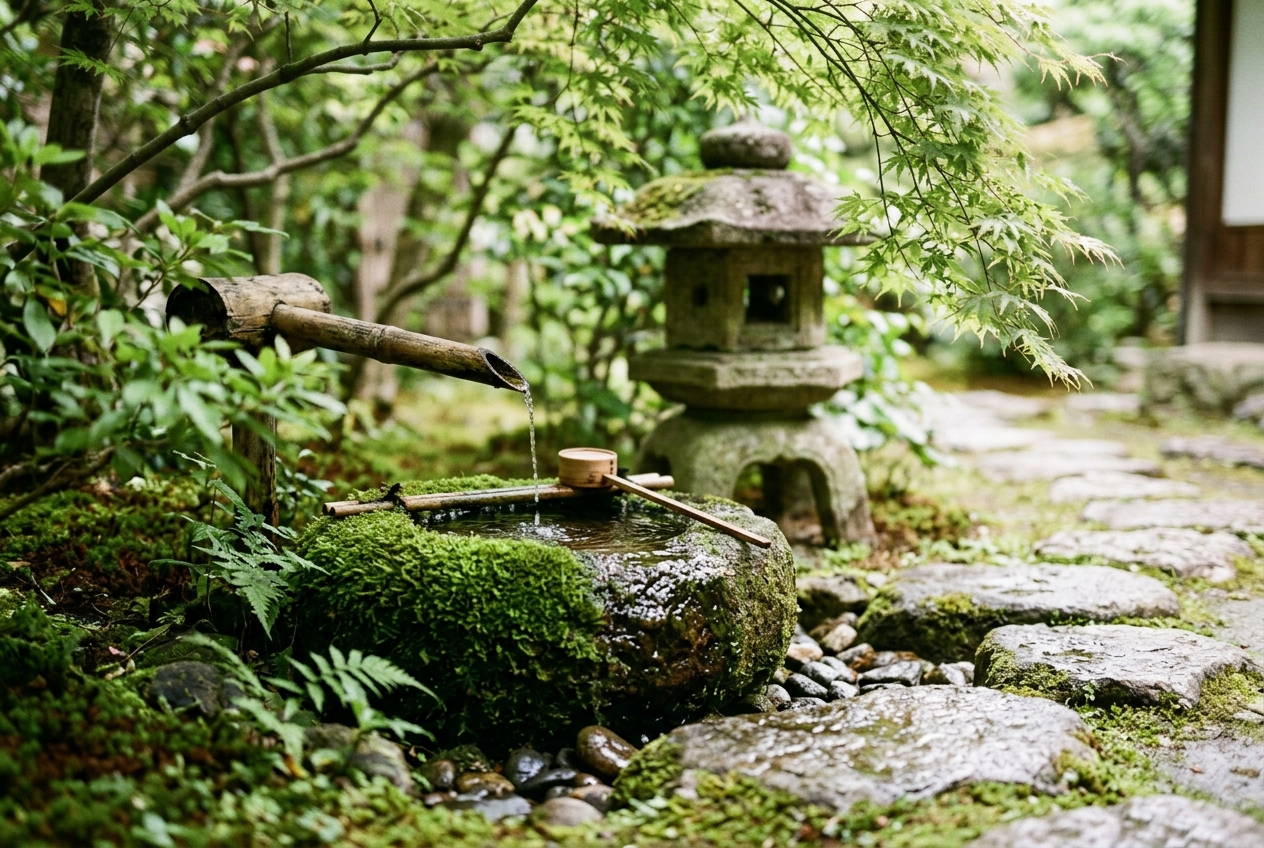
The stone lantern and the low water basin are quiet signatures of the style. Placed well, they feel earned rather than decorative — a soft focal point, a spot to pause.
Pruned and Shaped Plants
Plants in a Japanese garden are guided, not left to sprawl. A pine shaped over years, a cloud-pruned shrub, a maple thinned to show its structure.
Screening and Fences
Bamboo screens, timber fences and clipped hedges frame the space, block out the busy world beyond, and create that sense of stepping into somewhere set apart.
Moss and Groundcover
That soft green carpet ties everything together, softening stone and filling the low spaces with quiet texture. Where true moss struggles, we reach for groundcovers that read the same way.
Getting these elements to talk to each other — that's the craft. Any one of them on its own is just an object. Arranged with intent, they become a landscape.
Which Tradition Suits You?
Styles of Japanese Garden
“Japanese garden” isn't one single thing. Over the centuries the tradition grew into several distinct styles, each with its own purpose and feel. Knowing which one suits your space, your block and the way you want to use it is half the design. These are the recognised types we can create for you.
The Dry Rock Garden (Zen / Karesansui)
The most pared-back and contemplative of them all. Raked gravel, a few carefully placed stones, very little planting. It's the garden you sit and look at rather than walk through — meditative, minimal, endlessly calming. Perfect for a courtyard or a viewing spot off a quiet room.
The Strolling Pond Garden
A larger, walk-through garden built around water. Paths wind you past a pond, over a bridge, around plantings that reveal new views at every turn. This is the style for a generous backyard where you want a journey, not just a scene.
The Tea Garden
Traditionally the approach to a tea house — a simple, restrained path of stepping stones, a water basin, soft planting, all designed to settle the mind before you arrive. Understated and deeply peaceful, it suits a side garden or a front entry sequence beautifully.
The Small Courtyard Garden (Tsubo-Niwa)
Proof that you don't need acreage. Tucked into a tiny enclosed space — a light well, a narrow side yard, a spot off the kitchen — the courtyard garden brings the whole tradition into a footprint the size of a rug. Ideal for smaller Toowoomba blocks and townhouses.
Tell us how you live and what you're drawn to, and we'll steer you toward the tradition that fits. Working in a specific style, properly, is where our command of this craft really shows.
Thinking about which style suits your place? Book a no-obligation consultation and we'll walk your space with you, talk through the options, and sketch out what's possible. Call us at (07) 4580 2889 or request a quote below.
Japanese Style Adapted for the Darling Downs
Here's where we'll be straight with you, because it matters. The principles of Japanese design travel anywhere — balance, restraint, empty space, symbolism don't care about your postcode. And because this style leans on structure, stone and form rather than a specific plant list, it adapts to our region better than most people expect. The bones of a great Japanese garden work just as well in Rangeville as they do in Kyoto.
The honest bit is the planting. Some of the classic Japanese plants have a hard time up here. Toowoomba's elevation brings real frosts, our summers can turn dry, and a few of the iconic species — certain maples, azaleas, true moss — need the right spot or the right microclimate to thrive. Plonk them in the wrong position and they'll sulk, scorch or fail, and there's no honesty in selling you a garden that dies its first winter.
So this is how we handle it. We keep the design principles completely intact — the balance, the stonework, the shaped forms, the calm — and we're frost-aware and placement-smart with the plant palette. Where a classic will struggle, we choose a hardy, locally-suited alternative that reads the same to the eye. You get the authentic look and feel, built to actually last in Darling Downs conditions. That's not a compromise on the style. It's the difference between a garden that survives and one that just photographs well on day one.
The Plant Palette
Planting for a Japanese Garden Here
Good planting in a Japanese garden is about structure and restraint, not variety. A handful of the right plants, placed and shaped with care, does far more than a crowded bed. Here's what tends to work on the Darling Downs, with honest notes on where each one needs a little thought.
Japanese Maples
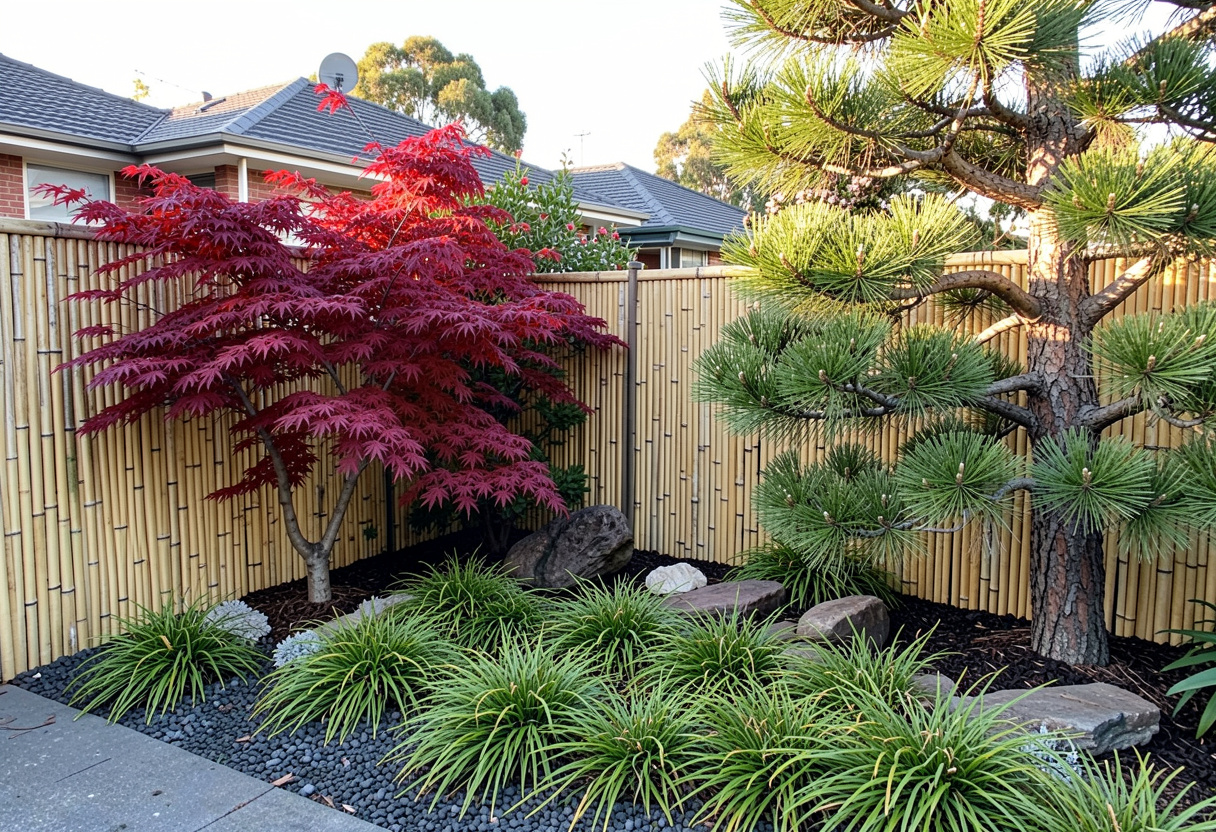
The signature small tree — delicate leaves, beautiful structure, stunning autumn colour. Frost and hot afternoon sun can burn them. We place them in sheltered, part-shaded spots, or choose tougher cultivars.
Pines & Shaped Evergreens
The permanent structure — shaped over time into that classic wind-sculpted form. Hardy and reliable here; the true backbone of a Toowoomba Japanese garden.
Clumping Bamboo
Screening, privacy, gentle movement and sound. We only use clumping, non-invasive types — never running bamboo that takes over.
Mondo Grass & Moss Alternatives
Soft green groundcover to tie the garden together. True moss needs consistent moisture and shade; mondo grass gives the same effect and copes with our dry spells.
Azaleas & Camellias
Restrained bursts of seasonal flower. Beautiful where conditions suit — the right aspect and some frost protection.
Hardy Substitutes
Stand-ins for the classics that struggle. Chosen to read authentically, so the garden feels right even where the traditional plant won't cope.
The skill isn't in the plant list. It's in matching each plant to the exact spot it'll flourish, then shaping it so it plays its part. That local reasoning — knowing what our frosts and summers do — is what keeps a Japanese garden looking intentional years after it goes in.
Calm, Low-Maintenance, Year-Round Structure
Part of what draws people to this style is the promise of a garden that doesn't run your weekends. And there's real truth in it. Because a Japanese garden is built on structure — stone, gravel, shaped evergreens, considered form — it holds its shape and its beauty right through the year. No big seasonal collapse, no bare beds in winter. Evergreen bones mean there's always something calm and interesting to look at, in July as much as in October.
Compared with a fussy cottage garden that needs constant deadheading and replanting, a well-designed Japanese garden asks far less of you day to day. Less mowing, less chasing weeds, less of that Sunday-afternoon grind — the same thinking that runs through our drought-resistant garden design work, just applied to stillness instead of dry summers.
We'll be honest about one thing, though, because it'll serve you better than a promise we can't keep. An authentic Japanese garden isn't a zero-effort garden. It rewards a little skilled, careful attention — the annual pruning that keeps a pine reading right, the raking that keeps the gravel calm, the light hand that maintains the restraint the whole style depends on. That upkeep is gentle and occasional, not the weekend-swallowing slog you're trying to escape. And if you'd rather not do it yourself, it's exactly the kind of care we can take off your hands. Either way, you get the calm without the chore.
Recent Projects & Get Started
The atmosphere is the real product here — and it's hard to put into words, easier to feel. Our recent Japanese garden projects across Toowoomba and the Darling Downs show what balance, restraint and honest craftsmanship look like once they're built: raked gravel catching the morning light, stonework that looks like it grew from the ground, spaces that make people go quiet the moment they step in. Have a look through, and picture your own place with that same stillness.
If you're ready for a garden that feels like a retreat instead of a to-do list, we'd love to talk. Every project starts with a proper conversation about your space, your block, and the kind of calm you're after — no pressure, no obligation. As a Japanese design service under our broader garden design and installation work, it gets the same considered process from first sketch to finished garden.
Let's Design a Japanese Garden for the Darling Downs
Book your consultation or request a quote today, and let's design a Japanese garden that belongs right here on the Darling Downs.
Book Your Free ConsultationFrequently Asked Questions
How much does a Japanese garden cost in Toowoomba?
It depends entirely on the size of your space and how much stonework, water and planting goes in — a small courtyard garden is a very different job to a full strolling pond garden. We'd rather give you a real figure than a guess, so we always quote after seeing your block. Book a consultation and we'll walk your space and give you honest numbers with no surprises.
How long does it take to build one?
Most Toowoomba Japanese gardens we install take somewhere from a couple of weeks to a month or so on the ground, depending on the scale and how much earthworks and stone are involved. The design and planning stage comes first, and that's worth taking time over. We'll give you a clear timeline before we start so you know exactly what to expect.
Will a Japanese garden add value to my property?
In the established suburbs like Rangeville and Middle Ridge, a calm, well-built garden absolutely lifts your street appeal and the way buyers feel walking in. Because this style is evergreen and structure-led, it still looks intentional years later, which is exactly what adds lasting value rather than a quick fix. A garden that reads as considered and low-fuss is a genuine selling point up here.
Is it a good style for families with kids?
It can be, and we design plenty of them that way. We can keep the calm, contemplative zones for the adults and shape the layout so children still have safe, open space to move through — it's all in the planning. If you've got little ones, just tell us how the family uses the yard and we'll design around it.
Do you handle the ongoing maintenance, or just the build?
Both — and a lot of our Toowoomba clients are time-poor professionals who'd rather we looked after it. A Japanese garden only needs light, skilled attention through the year, so we can pop back for the seasonal pruning and raking that keeps it reading right. You get the stillness without giving up your weekends.
Can you do a small Japanese garden if I don't have much space?
Absolutely, and honestly some of our favourite Darling Downs projects are the tiny ones. A courtyard garden fits into a light well, a narrow side yard or a spot off the kitchen and still holds the whole tradition — stone, gravel, a shaped plant, real calm. Small blocks and townhouses are no barrier at all.