
Toowoomba's Local Landscaping Team
Drought-Resistant Garden Design in Toowoomba
Drought-resistant garden design in Toowoomba & the Darling Downs. Water-wise, low-maintenance gardens built to last.
- Servicing All of Toowoomba
- Free Design Consultations
- Mon–Sat, 7am–5pm
Every February, the same phone call comes in. A homeowner over in Rangeville or Middle Ridge is standing in their backyard, hose in hand, looking at plants that were thriving back in October and are now crisp and brown by the end of summer. They've watered. They've fussed over it. And still, half the garden has thrown in the towel. Sound familiar?
Here's what most people get wrong about drought-resistant garden design. They picture gravel, a couple of sad-looking cactus, and a yard that looks like the surface of Mars. That's the fear, and it's a fair one. But it's not how this works — not the way we do it.
A properly planned water-wise garden can be green, soft, full of colour and movement, and still coast through a Darling Downs summer on a fraction of the water. That's the whole promise. You get the garden you actually wanted, without the weekend hose marathons and without the water bill that makes your eyes sting.
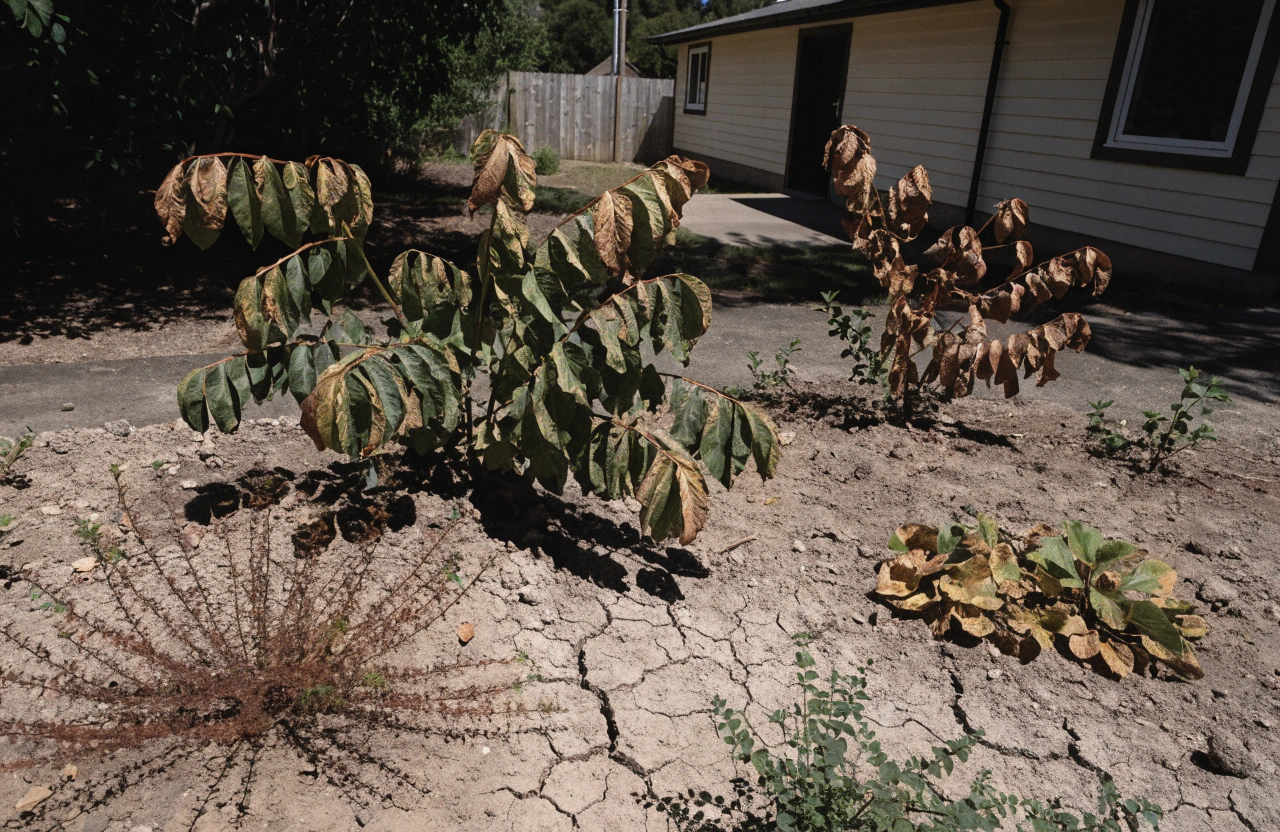
We're a Toowoomba landscaping team, and we've been designing gardens for these exact conditions for years — the hot dry summers, the heavy clay soil you find in pockets across the Downs, and the memory of water restrictions that still sits in the back of everyone's mind up here. We work right across Toowoomba and the wider Darling Downs, from Centenary Heights and Kearneys Spring through to the bigger blocks out on the edge of town.
So if you've been told you have to choose between a beautiful garden and a low-water one, we'd like to change your mind. You can have both. Let us show you how.
Why Drought-Resistant Design Makes Sense in Toowoomba
Let's talk about what you're actually dealing with up here, because it's not the same fight the coastal folks are having.
Toowoomba summers get hot and they get dry. The rain has a habit of disappearing for weeks right when your garden needs it most, and anyone who's lived on the Downs for a while remembers what the water restrictions felt like. Buckets in the shower. Watering allowed on certain days only. Whole gardens written off because keeping them alive wasn't worth the trouble. That memory doesn't fade, and it shouldn't — because the next dry stretch is always somewhere on the horizon.
Then there's the soil. In a lot of Toowoomba yards you're working with heavy clay. It bakes hard and cracks in summer, then turns to a sticky mess when the wet finally arrives. Water either runs straight off the top or sits and drowns the roots. Neither of those is any good for a thirsty garden that needs a steady drink to survive. Plants that demand constant moisture in that kind of ground are fighting a losing battle from the day they go in.
And here's the part that quietly wears people down — the dependence. A garden built around plants that can't cope with dry weather turns you into its full-time carer. Miss a few days over a hot weekend away and you come home to casualties. You're forever topping it up, replacing the ones that didn't make it, and watching the water bill climb through the roof from December to March.
A drought-resistant garden flips that whole arrangement around. Instead of a garden that leans on you to survive, you get one built to handle exactly what the Downs throws at it. It's designed for the climate you actually have, not the one you wish you had. That's the difference between a garden that fights the conditions and one that's made for them.
Our Water-Wise Design Approach
Here's the thing people miss: a garden that survives on less water isn't just about picking a few tough plants and hoping for the best. Drought resistance is something we build into the design from the ground up — quite literally. It's engineered, not lucky.
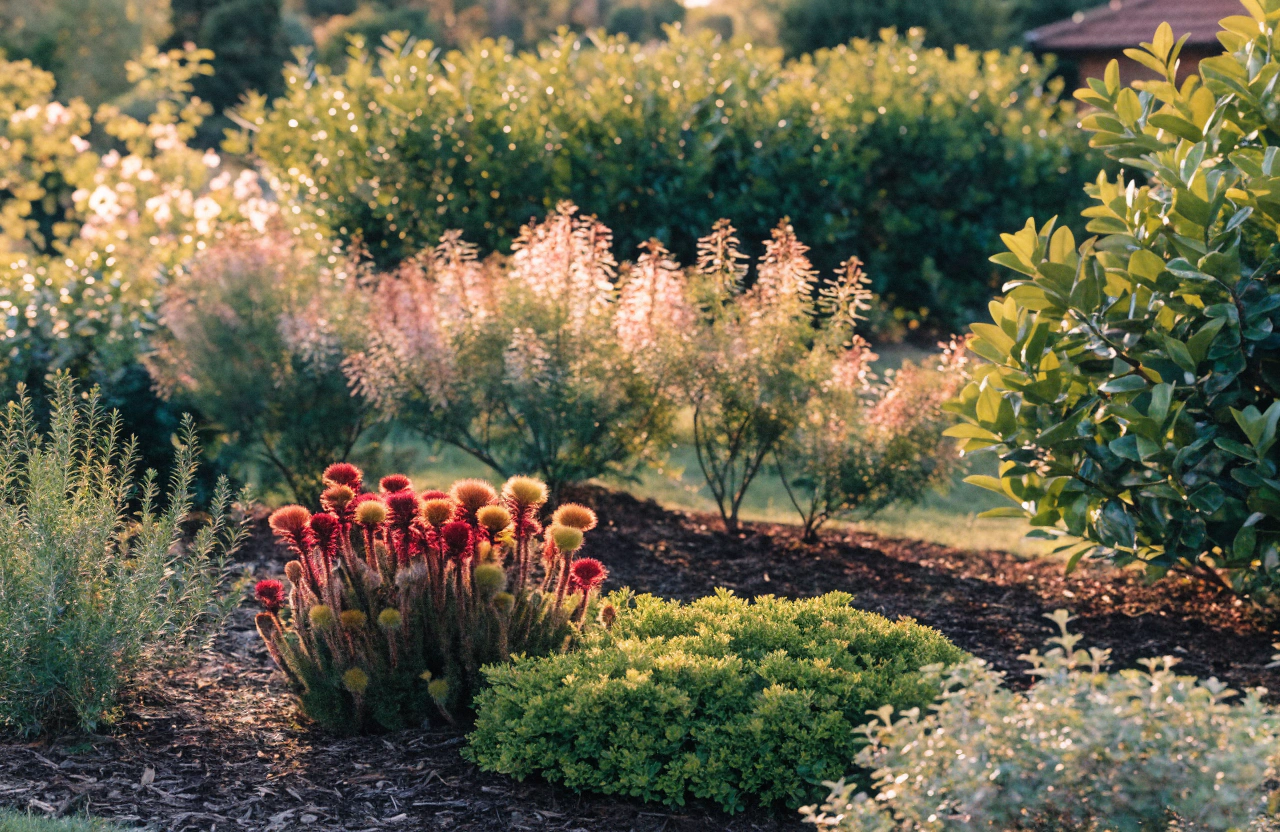
We Start With the Soil
That's where most gardens are won or lost. On the Downs that usually means dealing with clay. We assess what you've got, then work to improve its ability to hold moisture — feeding it organic matter, opening it up so water can soak in instead of running off, and topping it with a good layer of mulch that keeps whatever moisture is down there from cooking off in the heat.
We Group Plants by Water Need (Hydrozoning)
It's simpler than it sounds. The thirstier plants go together where they can be looked after as a group, and the tough customers go where they'll thrive on almost nothing. That way you're never watering the whole garden to keep a handful of plants happy.
Smart Irrigation Delivers It
We lean on drip systems that put water straight at the roots where it counts, rather than spraying it into the air to evaporate in the Toowoomba sun. Where it makes sense, we tie in your rainwater tank so the sky does some of the work for you.
We Rethink the Lawn
A big thirsty patch of grass is often the single biggest water drain in a backyard. We're not saying rip it all out — by trimming it back to the space you actually use and filling the rest with hardy planting and groundcover, we cut your water use right down without cutting the enjoyment.
Put all that together — soil, plant grouping, clever watering, mulch, and a sensible amount of lawn — and you've got a garden that holds its own through a dry summer because it was designed to.
The Plant Palette
Drought-Tolerant Plants That Still Look Lush
This is where we get to change your mind for good, because the plant list is the proof that water-wise doesn't mean barren. You can build a soft, green, colourful garden entirely out of plants that shrug off dry weather. Here's a taste of what we work with and why each one earns its place on the Downs.
Westringia
Tough native shrub, handles heat and dry with ease, and clips beautifully into soft green shapes and hedges.
Lomandra
Hardy strappy foliage that stays green through the worst of summer and barely asks for a thing.
Dianella
Grassy native with blue-green leaves and little berries — reliable, adaptable, and easy on water.
Grevillea & Banksia
Native flowering plants that bring in the birds and bloom without needing constant moisture.
Kangaroo Paw
Bold, colourful flower spikes that love the heat and add real character.
Agave & Succulents
Structural, sculptural, and about as drought-proof as it gets — great for anchoring a bed.
Ornamental Grasses
Movement, softness, and texture that sway in the breeze and cope happily with dry spells.
Salvias & Hardy Perennials
Long-flowering colour for the parts of the garden that need a lift, without the thirst.
Pigface & Groundcovers
Spreading colour that carpets the ground, smothers weeds, and needs next to no water.
Look at that list again. That's not a gravel pit. That's greenery, flowers, texture, and colour — a garden with life in it. The spiky grey stuff has its place for structure, but it's one note in a much bigger song. We can build you something soft and lush that just happens to be tough as nails underneath.
One honest word of caution, though, and it's one we give everyone up here. Toowoomba sits high, and that elevation means our winters bite harder than the coast. Some of the drought-tolerant subtropical plants that laugh off a dry summer will still feel the frost on a cold Downs morning. So part of our job is choosing the right plant for the right spot and giving the tender ones a bit of winter protection where they need it. Drought-tough and frost-tough aren't always the same thing, and we plan for both.
Mulch, Soil and Smart Irrigation
Now for the unglamorous part — the bits that do the heavy lifting and never get the credit. You can plant the perfect palette and still watch it struggle if the fundamentals aren't right. Get these three things sorted and everything else falls into place.
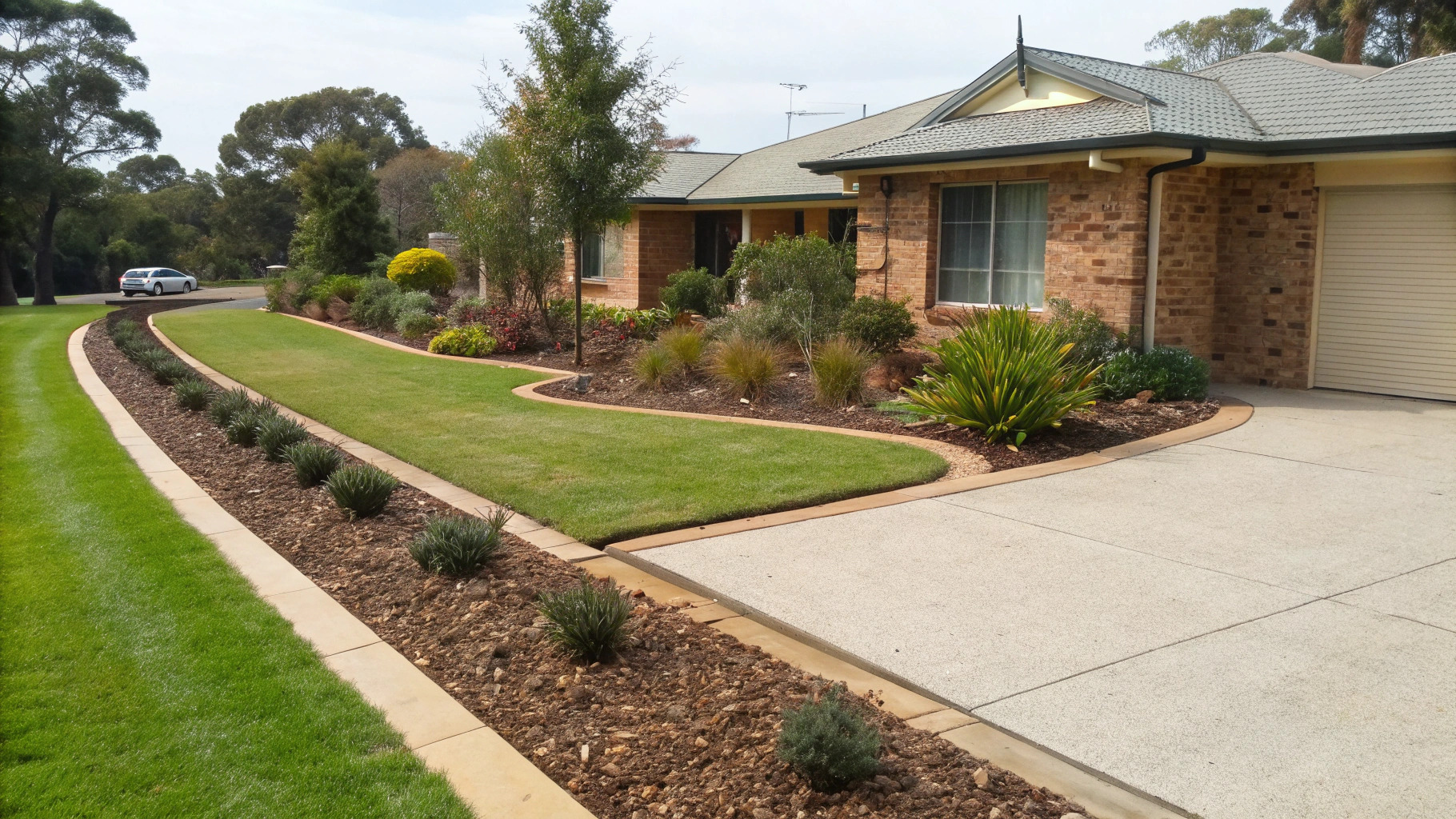
Soil Comes First, Always
Healthy soil that holds moisture is the difference between a plant that coasts through a dry fortnight and one that wilts by Wednesday. On our clay, that means improving structure so water actually penetrates and the roots can breathe. Skip this step and you're pouring good water after bad.
Mulch Is Your Garden's Blanket
A proper layer — and depth matters here, too thin and it does nothing — keeps the soil cool, slows evaporation to a crawl, and stops the weeds that would otherwise steal water from your plants. It's about the cheapest, most effective thing you can do for a dry-climate garden.
Smart Irrigation Ties It Together
Efficient watering means getting moisture to the roots with none wasted — drip lines over sprinklers, timed for the cool of the day, tuned to the season. When the fundamentals are handled properly, your plants don't just survive the dry months. They actually get established well enough to look after themselves.
None of this is flashy. But it's the horticultural groundwork that makes a water-wise garden work, and it's the part a lot of DIY jobs get wrong.
Why Clients Choose This Style
Low-Maintenance and Water-Bill Benefits
Let's add up what all this actually buys you, because the payoff is where it gets good.
A Smaller Water Bill
Less thirsty lawn, efficient watering, and plants that don't need constant topping up — your summer bills stop climbing.
Your Weekends Back
No more standing out there with the hose every night. The garden looks after itself for the most part, so you can spend that time with the family instead.
Fewer Plants to Replace
When your garden is built for the conditions, plants don't die off every summer. You buy them once and they stay.
Peace of Mind Through the Dry
When the next dry stretch or set of water restrictions rolls around — and on the Downs, it will — your garden keeps going while the neighbours' brown off.
This is the real return on the investment. You're not just buying a nicer-looking yard. You're buying one that costs less to run, asks less of your time, and holds its own through exactly the weather that used to wipe it out.
See What We've Built
The best way to shake off the “drought means barren” idea is to see it with your own eyes. Have a look through our recent Toowoomba and Darling Downs projects — established, water-wise gardens that are green, full, and genuinely lovely to sit in. Not a gravel pit in sight.
We've been designing for these conditions for years, we know the local soil and Council water considerations inside out, and our happy clients across the Downs are the proof it works.
Ready to Have a Garden That Survives the Summer and Still Looks the Part?
Get in touch for a consultation and let's talk about what your yard could become. Book your quote today — your weekends, your water bill, and your garden will all thank you for it.
Book Your Free ConsultationFrequently Asked Questions
How much does a drought-resistant garden design cost in Toowoomba?
It depends on the size of your block and how much of the yard you want reworked, so there's no one-size number we can give you honestly. What we can tell you is that a water-wise garden pays you back over time through lower water bills and plants you're not forever replacing. Give us a call and we'll come out, look at your space, and give you a straight quote with no surprises.
How long before my new garden actually looks established?
Most of our Toowoomba gardens start filling in nicely within the first growing season, and they really hit their stride after a year or two once the roots are down deep. The trick is getting through that first summer, which is exactly why we spend so much time on the soil and mulch upfront. Look after it in those early months and it'll look after itself for years after.
Will a drought-tolerant garden survive Toowoomba's frosts as well as the dry?
This is the big one up here, and the honest answer is that drought-tough and frost-tough aren't always the same thing. Our elevation means winter mornings bite harder than the coast, so some of the dry-loving subtropical plants still need a sheltered spot or a bit of protection. We plan for both when we choose your plants, so you're never caught out by a cold snap after surviving the summer.
Is a water-wise garden really low-maintenance, or will I still be out there every weekend?
You'll be out there a whole lot less, which for most of our time-poor clients is the whole point. Once it's established, a well-designed drought-resistant garden in Toowoomba mostly ticks along on its own — a bit of seasonal tidying rather than a weekly chore. You get your weekends back for the family instead of the hose.
Can you work with the heavy clay soil in my yard?
Absolutely — clay is what we deal with across most of the Darling Downs, so it's home turf for us. The key is improving it properly so water soaks in instead of running off or drowning the roots, and that groundwork is baked into every job we do. Don't let dodgy soil put you off; it's a solvable problem when it's handled right.
Do I have to get rid of my lawn completely?
Not at all, and we'd usually talk you out of it if you tried. A patch of lawn is lovely for the kids and the dog, so we just trim it back to the space you actually use and fill the rest with hardy planting. You keep the bit you enjoy and lose the thirsty part that was driving your water bill up.