
Toowoomba's Local Landscaping Team
Erosion Control & Slope Stabilisation in Toowoomba
Stop soil loss in its tracks and hold unstable ground for good — properly drained, properly engineered. Free on-site assessment.
- Free Site Assessment
- QBCC-Licensed & Insured
- Mon–Sat, 7am–5pm
You usually notice it after the first big storm of the season. A thin fan of dirt spread across the path where there wasn't one before. A few weeks later there's a little channel cut into the slope, and the next downpour makes it a bit deeper. That's how it starts — small enough to ignore, right up until the day it isn't.
Water and gravity don't take weekends off. A small scour becomes a gully. A damp bank starts to slump. And before long the ground is creeping toward your garden, your driveway or your fence line, carrying your soil off with it every time it rains.
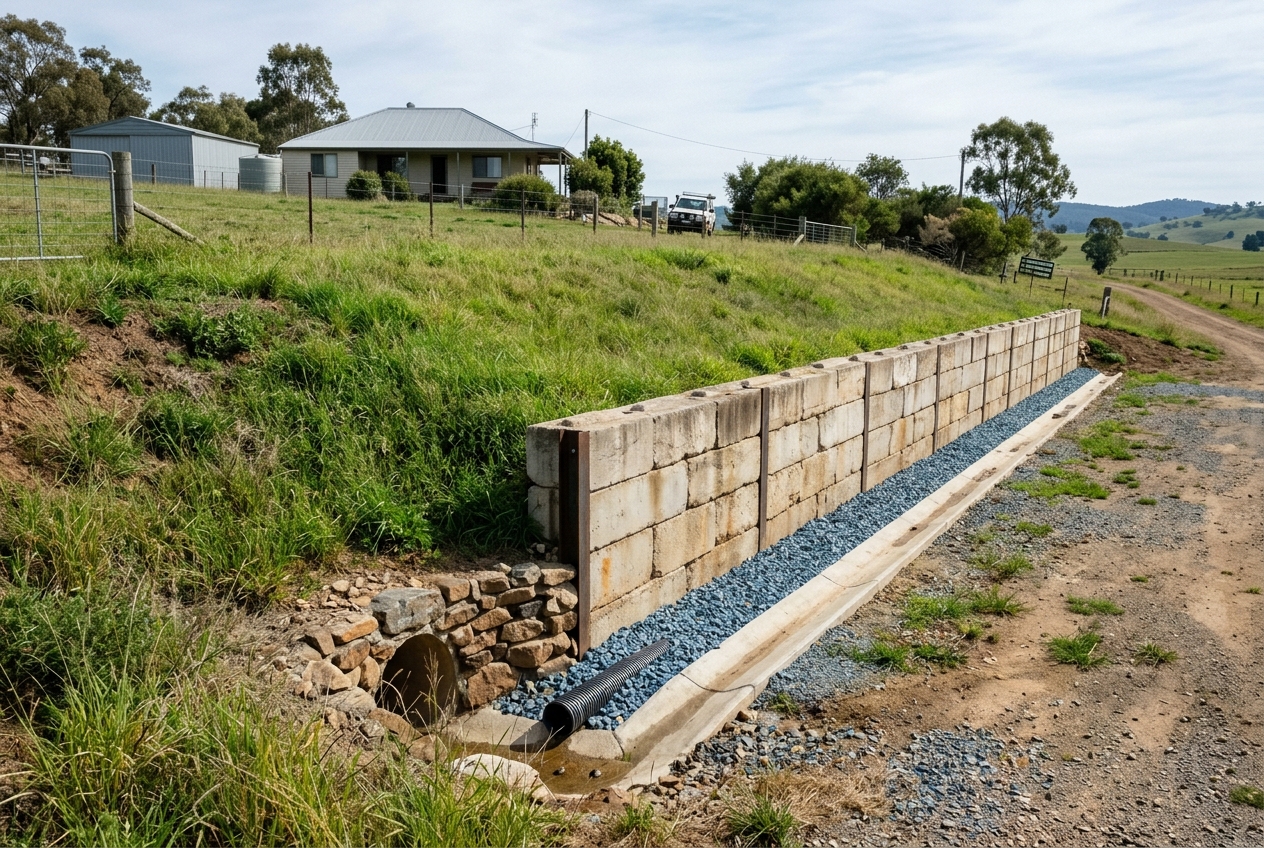
Across Toowoomba and the Downs, we build erosion control retaining walls that stop soil loss in its tracks and hold unstable ground for good. Whether it's runoff scouring a slope after a big storm, a slumping embankment leaning toward the shed, or a creek or dam bank quietly washing away, we work out what's actually driving it and build the right wall — properly drained, properly engineered — to fix it.
We work right across the region. Suburban blocks around Toowoomba fighting runoff scour on a slope, and acreage properties out on the Downs and around Highfields with driveway cuttings, batters, and creek and dam banks that need holding. Wherever the water's moving your ground, we can stop it.
Get a free on-site assessment. Call us at (07) 4580 2889 or request a quote below.
Catch It While the Fix Is Small
Signs You Need Erosion Control (Before It Gets Expensive)
Your slope usually warns you before it fails. Keep an eye out for any of these.
Soil visibly washing off a slope or bank after rain.
A scour or channel that gets deeper with each storm.
A bank or embankment that's slumping, cracking or bulging.
Exposed roots, undercut fences, or soil piling up at the bottom of a slope.
A creek bank, dam bank or gully eating into your usable land.
Bare, unstable ground that won't hold plants or grass.
Catch it early and it's a straightforward wall. Leave it alone and erosion works its way under your footings, your driveway and your structures — and the job that could have been simple gets a whole lot bigger.
What Causes Erosion on Toowoomba and Downs Properties
Half the battle is knowing what you're actually up against, and the Downs throws a few things at your slope at once.
The storms here don't mess about — heavy, intense runoff comes through fast and carries soil with it. Then there's the ground itself. Reactive black soil and clay crack open in the dry, and once it's saturated it channels water and slumps. Sloping escarpment and acreage blocks make it worse by funnelling all that flow into the same paths. Add cleared or bare ground with nothing binding the soil together, and banks or cuttings with poor drainage or none at all, and you've got everything erosion needs to keep going.
Here's the thing worth holding onto: erosion is a water problem first and a soil problem second. That's why our fix always starts with controlling where the water goes.
Why We Start With Drainage, Not the Wall
It's tempting to think the fix for a washed-out bank is simply something solid to hold it up. But if the water that caused the damage is still running the same path, it'll find the gap, undercut the base, and you're back where you started within a season or two.
That's why every erosion-control job we build starts underground. Ag-pipe to carry water away, geofabric so fines don't clog the drainage over time, and free-draining aggregate backfill so pressure never gets the chance to build behind the face. The wall is what you see. The drainage behind it is what decides whether that wall is still standing in ten years.
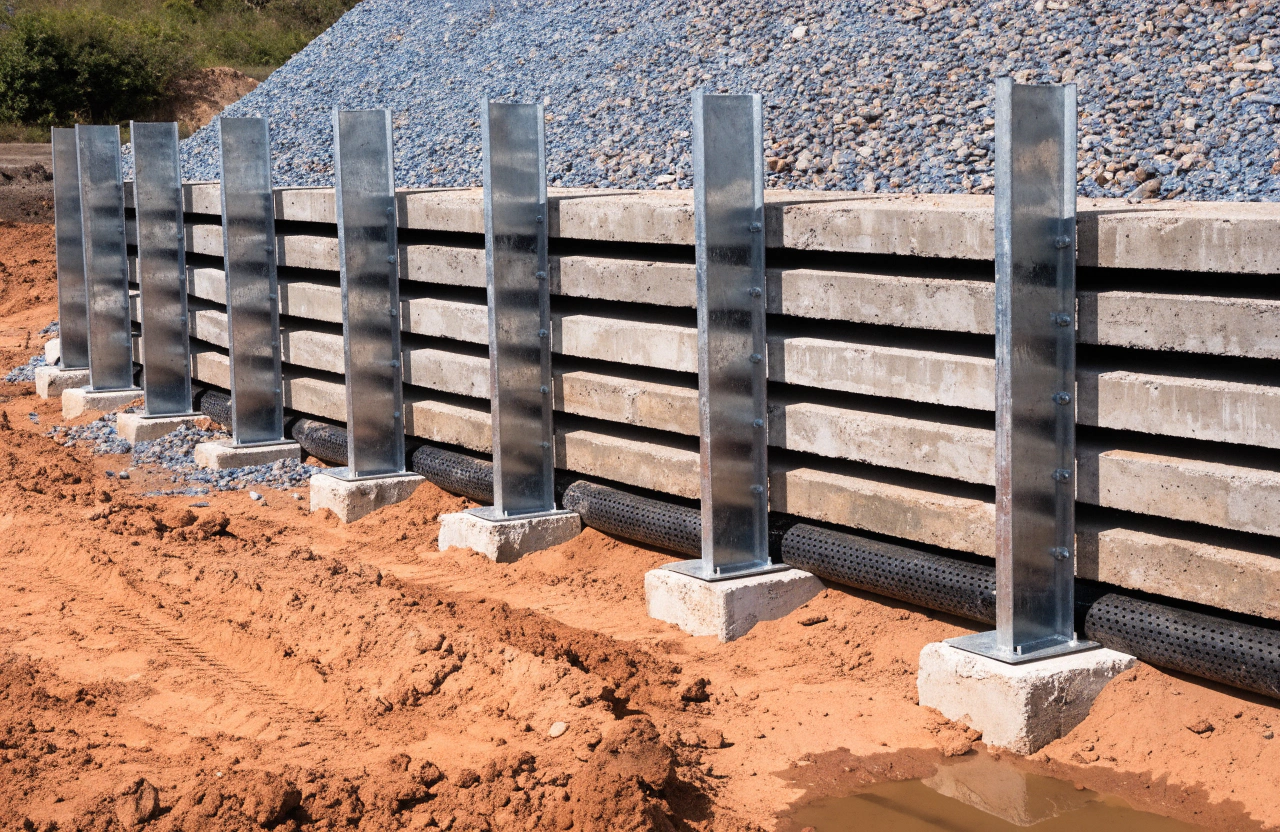
Cutting It Off at the Source
How We Stop Erosion and Stabilise the Slope
Slope stabilisation in Toowoomba isn't about dropping a wall in front of the mess and hoping. Our approach usually pulls together a few of these.
Retaining Walls to Hold the Unstable Face
Concrete sleeper, sandstone or rock and boulder, chosen to match the site and the load it's carrying.
Drainage First
Ag-pipe, aggregate, geofabric and surface drainage to redirect the water that's causing the damage in the first place.
Terracing on Longer Slopes
Breaks up the flow and takes the load off any single wall.
Rock and Boulder Walls & Beaching
For rural banks, gullies and watercourse edges.
Revegetation-Friendly Finishes
So planting can re-establish and lock the soil in for the long haul.
We work out the cause on-site and match the solution to it. There's no single fix that suits every slope, and anyone who tells you otherwise hasn't looked at your ground properly.
Rock and Boulder Walls for Rural Banks
Out on acreage and rural-residential blocks, a creek bank, dam bank or gully rarely wants a manicured finish — it wants something that looks like it belongs there and can shrug off real flow when the water's up. Rock and boulder walls and rock beaching do exactly that. Large, natural-faced stone placed to break up flow and hold a face, with none of the formality of a sawn block wall.
They suit watercourse edges especially well, because they're built to cope with water actually moving past them, not just sitting behind them the way a garden retaining wall does. It's a different kind of engineering problem, and it's one we handle regularly across the Downs.
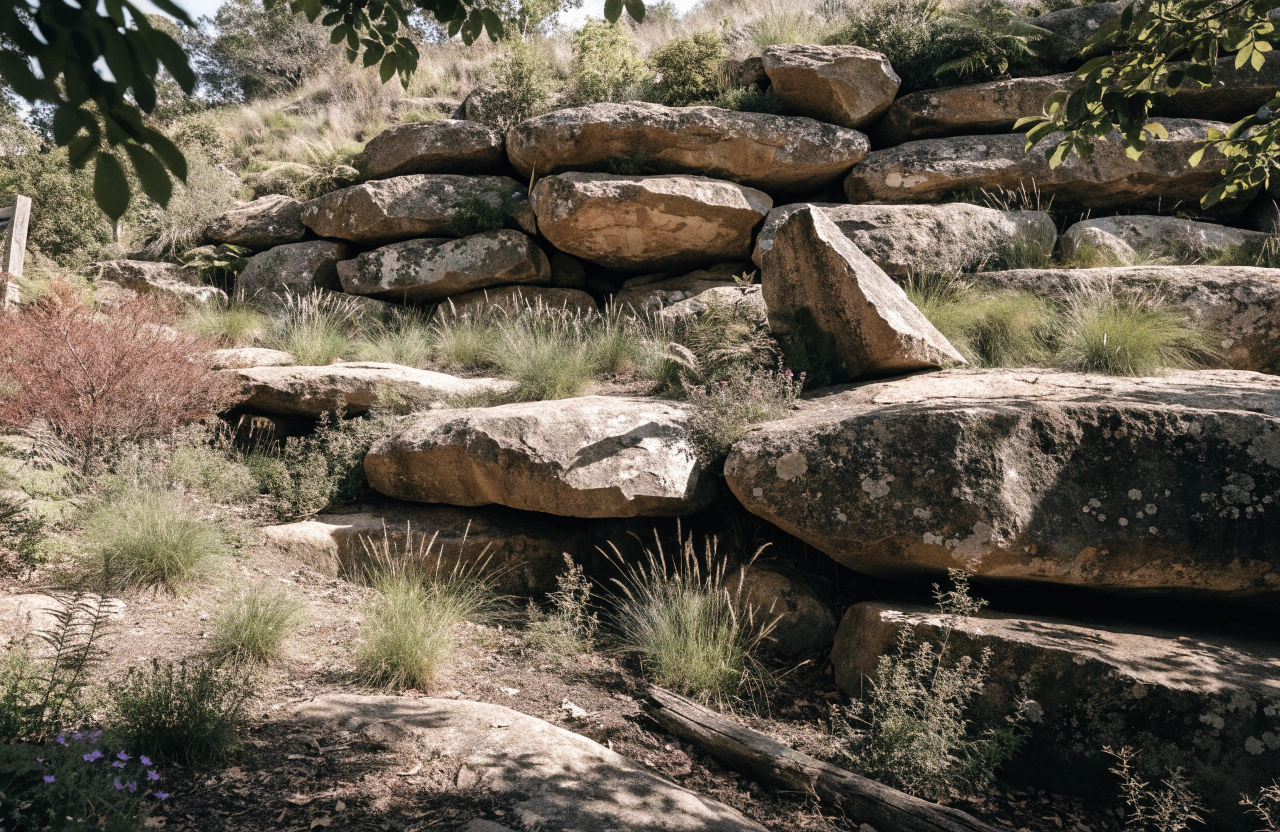
Matched to the Bank
Which Material Suits an Erosion-Control Wall?
The right material comes down to how high the bank is, how much it's carrying, and the look you're after.
Concrete Sleepers
Strong and structural — ideal for holding higher or heavily loaded banks.
Sandstone / Rock & Boulder
Natural-looking, and hard to beat for rural banks, gullies and watercourse edges.
Timber
Cost-effective for lower banks and garden slopes.
Plenty of slopes need a combination of these plus terracing to do the job properly. We'll recommend the right mix for your site once we've seen what the water and soil are doing. See the concrete sleeper, sandstone and timber pages for more on each.
Why Toowoomba and Downs Landowners Trust Us With Erosion Work
Erosion jobs are unforgiving of guesswork in a way a straightforward garden wall isn't. Get the drainage wrong on a bank that's already moving and you haven't just wasted money — you've often made the problem worse, because now there's a wall in the way of water that's still looking for somewhere to go.
We're QBCC-licensed for structural retaining work and fully insured, and any wall that's higher or heavily loaded gets proper engineer certification rather than a guess at what "should" hold. That's backed by a workmanship guarantee, because erosion control only works if it's still doing its job in ten years, not just on install day.
Our Process
Simple and no surprises. On-site assessment to work out what's driving the erosion, then a drainage and stabilisation plan built around it, engineered footings, the build itself, and a revegetation-ready finish so planting can take hold. Start to finish, you'll know what's happening and why.
Erosion is often a drainage problem as much as a retaining one — see our stormwater management and drainage solutions pages, or the full range on our main retaining wall contractor page.
Stop the Erosion Before It Spreads
Erosion only ever moves one direction if you leave it, and every storm makes the job a little bigger. Get it looked at now, while it's still a small scour and not a gully threatening your driveway. The sooner it's assessed, the smaller the fix.
Get a Free On-Site AssessmentFrequently Asked Questions
How do I stop a slope or bank from eroding?
You control the water and hold the face. That means redirecting runoff with proper drainage before it can carve into the ground, then building a wall — and often terracing a longer slope — to hold the unstable face in place. Planting a revegetation-friendly finish helps lock the soil in once the wall's doing its job.
What's the best retaining wall for erosion control?
It depends on the bank. Concrete sleepers suit higher or heavily loaded banks, sandstone and rock or boulder walls work beautifully on rural banks, gullies and watercourse edges, and timber does the job on lower garden slopes. Often the best answer is a combination matched to your site.
Why does drainage matter so much for stopping erosion?
Because erosion is a water problem first. If you build a wall but leave the water running the same way it always has, it just finds another path and undermines the fix. Getting drainage right — ag-pipe, aggregate, geofabric and surface drainage — is what makes the whole thing last.
Can you fix a slumping or washed-out bank?
Yes. A slumping embankment or a washed-out creek or dam bank is exactly the kind of job we take on. We assess what's driving it, hold the face with the right wall, and set up drainage so it doesn't happen again.
Do erosion control walls on rural blocks need engineering or approval?
Higher and heavily loaded walls are built on engineered footings, and some sites do call for approval depending on the wall and the location. We'll sort out what your particular job needs as part of the on-site assessment, so nothing catches you out later.
How much does erosion control retaining cost in Toowoomba?
There's no flat figure, and anyone quoting one before seeing your slope is guessing. The cost tracks the size of the bank, the material, the drainage work involved, and whether the slope needs terracing. The one steady rule: the sooner it's assessed, the smaller the fix — and the smaller the bill.