
Toowoomba's Local Landscaping Team
Stormwater Management in Toowoomba
Capturing, directing and legally discharging the large volumes a Downs downpour throws at your block. Free site assessment.
- Free Design Consultation
- Fully Licensed & Insured
- Mon–Sat, 7am–5pm
You know the feeling. The sky over the Range turns that heavy shade of grey, the first fat drops start drumming on the roof, and inside of a few minutes it isn't really rain anymore. It's a wall of water. You stand at the window watching it pour off the gutters, run down the driveway, and gather where it has no business gathering. And somewhere in the back of your mind, a quiet little question starts up — the same one nearly every homeowner up here has asked at least once. Where is all this water actually going?
That question carries more weight in Toowoomba than almost anywhere else. This region remembers January 2011, and it has put years of work and serious investment into flood mitigation ever since. When the Darling Downs opens up, it doesn't do things by halves.
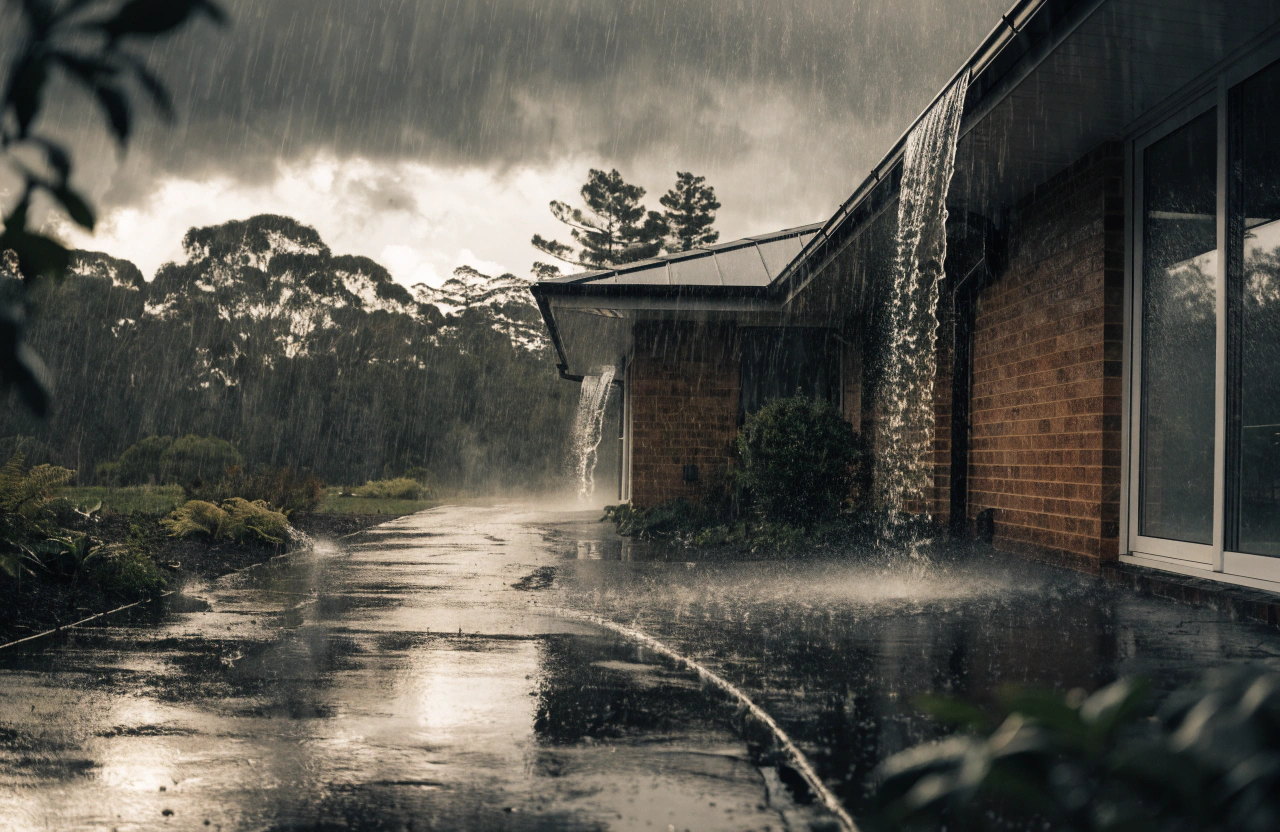
Now, here's the bit people tend to muddle. Stormwater management isn't the same thing as fixing a soggy corner of lawn. That's drainage — the localised stuff, the boggy garden bed, the patch that never dries out. Stormwater is the bigger picture. It's about capturing, directing, and legally discharging the large volumes of water that come off your roof, your paving, and the wider block during heavy rain — and doing all of it in a way that genuinely protects your property and keeps council satisfied.
That's our work, and this is our patch. We're based right here on the Downs — Rangeville, Centenary Heights, Middle Ridge, Kearneys Spring and the surrounding Toowoomba suburbs — so we know how this land sheds water, how these storms behave, and what the local council expects when that water leaves your block. That's not something an out-of-town crew can fake. Proper stormwater design, done by people who've watched these downpours firsthand, is what stands between your home and the next big one.
If the water on your property has ever given you pause, that's reason enough to have a proper look at it. Call us at (07) 4580 2889 or book a free site assessment below — we'll walk your block, follow the water, and tell you exactly what it's doing and what it needs.
What Stormwater Management Actually Covers
Let's clear up the difference properly, because it matters for how you spend your money.
Our drainage solutions page handles the everyday symptoms — the pooling lawn, the boggy garden bed, the erosion carving little channels through your mulch, the corner that stays wet three days after everyone else's has dried. Real problems, worth solving, but localised.
Stormwater management is a different job at a different scale. This is the whole-of-property thinking. When two hundred square metres of roof, a concrete driveway, and a paved entertaining area all shed water at once during a Downs downpour, that water has to go somewhere — and it has to get there safely, legally, and without ending up in your living room or your neighbour's yard. That's what we design for. The big volumes. The full block. The peak of the storm, not the drizzle.
Get that right and everything downstream gets easier. Get it wrong and no amount of pretty landscaping will save you when the sky opens up.
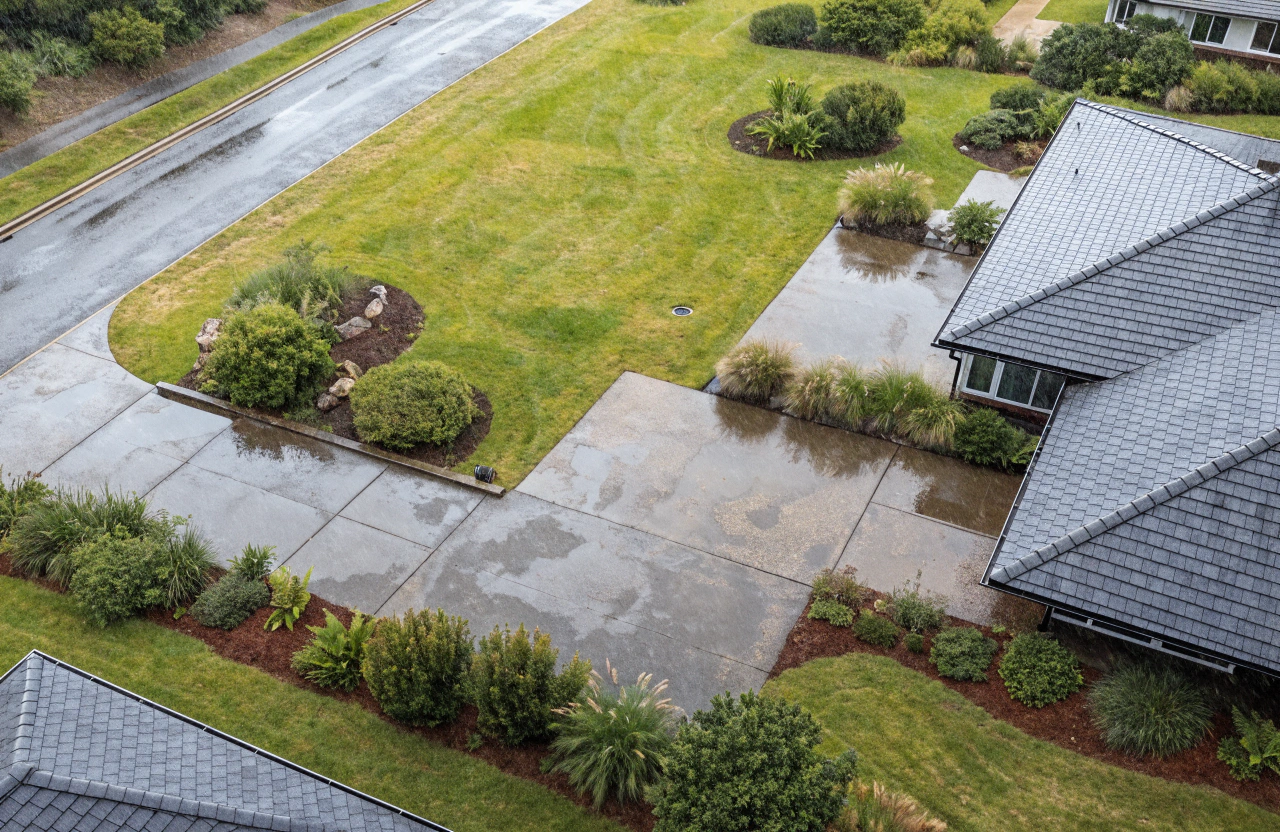
Toowoomba Knows Water. So Do We.
There's no need to dress this up. Toowoomba has a serious history with flooding, and January 2011 is still fresh for a lot of families here. The region has poured years of effort and real money into flood mitigation since, and for good reason — sitting up on the Range, the Darling Downs cops intense, fast downpours that can dump an astonishing amount of water in a very short window.
That history is exactly why proper stormwater work carries weight here that it simply doesn't in flatter, drier places. This isn't landscaping vanity. It's protection. A well-designed system gives your home a fighting chance when one of those storms rolls through, moving water off your property in a controlled, deliberate way instead of letting it find its own path — which, left alone, it always will, and never where you'd want it.
We've watched these storms firsthand, on these blocks, in these suburbs. That local knowledge shapes every system we put in the ground.
Council Compliance Isn't Optional — It's the Whole Point
Here's where stormwater really parts ways with decorative drainage work.
Where your stormwater ends up is regulated. It has to discharge legally — to the street, the kerb, or the council stormwater system — and it has to be done to standard. Get that part wrong and the problems aren't just technical. They're the kind that spark disputes with neighbours over inter-allotment drainage, or surface at the worst possible moment: during a building inspection, or right when you're trying to sell.
We treat that side of the job with the seriousness it deserves. We work to Toowoomba Regional Council's stormwater requirements, build to the relevant standards, and coordinate the licensed trades that a compliant connection legally requires. If you're a builder or a renovator, "we handle stormwater to council spec" is the whole reason to keep reading. That box gets ticked properly, the first time.
Matched to Your Block
Our Stormwater Solutions
Every property sheds water differently, so no two systems look the same. But most of our stormwater management work in Toowoomba draws on the same core solutions, matched to your block and the volume it has to cope with.
Roofwater & Downpipe Systems
Carries the large volumes coming off your roof safely down to the legal discharge point, instead of dumping it at the base of your walls.
Stormwater Pits & Piped Networks
Collects and directs flow across the whole block, so water moves where you want it rather than where gravity decides.
Inter-Allotment & Council Connections
Compliant, correct discharge to the street or council stormwater system — the legal endpoint, done right.
Detention & Retention Systems
Slows the release of water during peak rain so the system isn't overwhelmed all at once. Often a council requirement on new builds.
Rainwater Harvesting & Tanks
Captures stormwater for reuse, easing flood pressure now and giving you water to draw on when the dry spell hits.
Overland Flow Paths & Regrading
Designs safe routes for the water that exceeds the pipes in genuinely extreme events — the overflow plan every serious system needs.
Notice how many of those come up as council conditions rather than nice-to-haves. Detention in particular gets written into approvals on new builds all the time. When a system has to satisfy a condition, guesswork isn't an option — and it's exactly the kind of work we plan for from the start.
Building or Renovating? This Page Is for You Too
Not everyone lands here with a flooding problem. Plenty of people find us because they're building, extending, or subdividing — and there's a stormwater condition sitting on their approval that has to be met before anything moves forward.
If that's you, we speak your language. New builds, subdivisions, extensions, a fresh driveway adding hard surface to a block that was already at its limit — every one of those changes how water behaves on the property, and every one can trigger a council requirement. We design and install to satisfy those conditions, coordinate the licensed connections, and keep your project moving instead of stalling on a drainage sign-off. One less thing between you and the finish line.
The Sustainability Side: Flood Control That Pays You Back
Here's the part that makes stormwater work in Toowoomba genuinely clever rather than just protective.
This region lives at both extremes. Flooding rains one season, water restrictions and hard dry spells the next. A stormwater system that captures the runoff — through rainwater harvesting and tanks — flips a flood-control measure into a year-round asset. The same rain that used to threaten your home now fills a tank you can draw on to keep the garden alive when the restrictions bite.
That's a neat bridge to our irrigation work, where captured stormwater becomes the quiet engine behind a garden that stays green through summer. And because stormwater is always best planned into the whole site rather than bolted on afterward, it connects straight up to our landscape architect service, where the water strategy and the garden design come together from day one. If you've got localised yard issues on top of the big-picture water — the pooling and boggy patches we mentioned earlier — our drainage solutions handle those alongside.
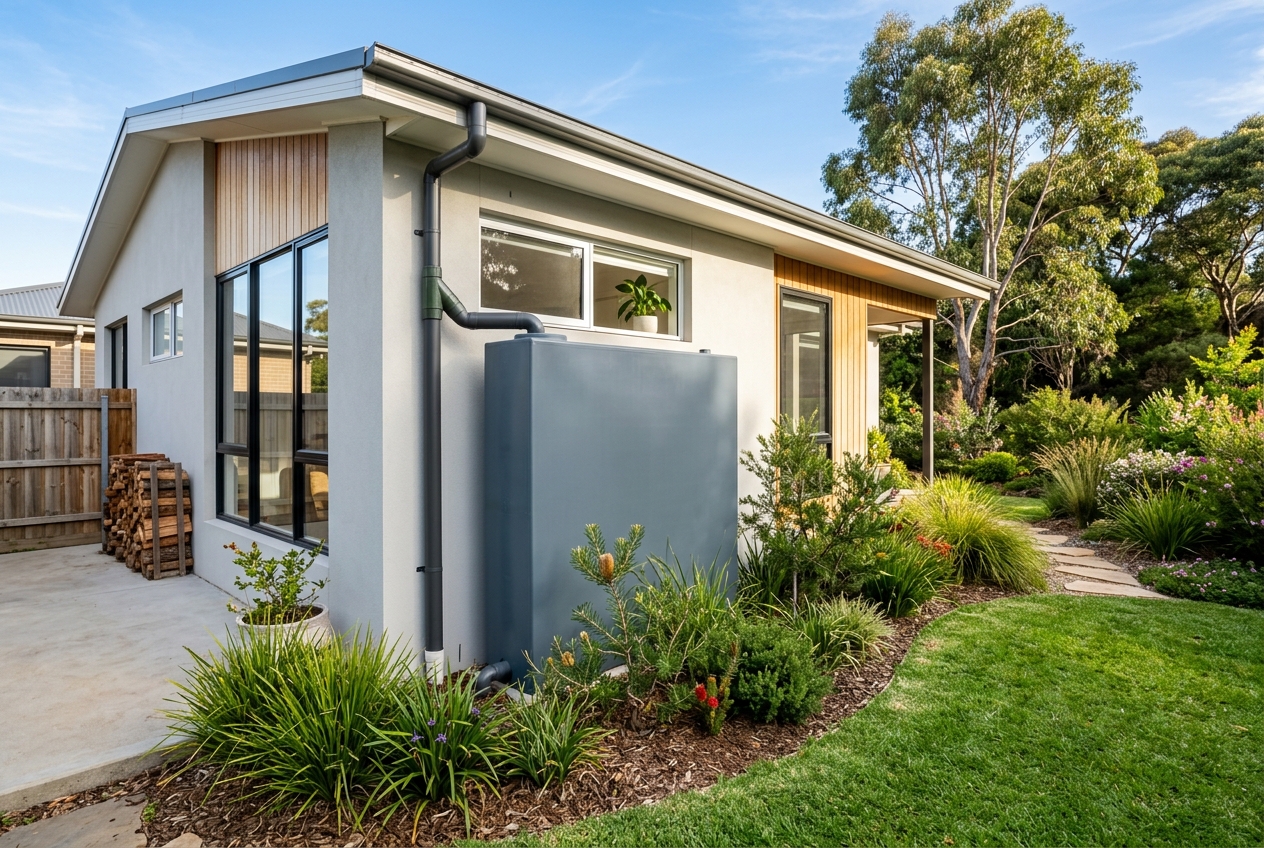
Let's Follow the Water on Your Block
If the water on your property has ever made you uneasy — during a storm, after one, or just as a nagging what-if — that's reason enough to have it looked at properly by people who do this here, all the time. We'll walk your block, follow the water from roof to boundary, and tell you plainly what it's doing and what it needs to keep your home protected and your project compliant.
Book a Free Site AssessmentStormwater Management: Frequently Asked Questions
Do I need council approval for a stormwater connection in Toowoomba?
In most cases, yes. Connecting to the street, kerb, or council stormwater system is regulated, and the connection has to be made to council standard by the licensed trades the work requires. We handle that side for you — the approvals, the standards, and the licensed connection — so it's done properly rather than picked up as a problem later.
What's the difference between drainage and stormwater?
Drainage deals with the localised symptoms — a soggy lawn, a boggy bed, a patch that won't dry out. Stormwater management is the bigger job: capturing, directing, and legally discharging the large volumes of water coming off your roof, paving, and the whole block during heavy rain. One fixes the wet corner. The other protects the property.
How do I stop stormwater flooding my property?
It starts with following the water — seeing where it comes from, how much of it there is, and where it's trying to go. From there, the right mix of pits, piped networks, detention, regrading, and a proper legal discharge point moves that water off your block in a controlled way instead of letting it pool where it does damage. A site assessment is the honest first step, because every block behaves differently.
Is a detention tank required for my new build?
Often, yes. Detention systems slow the release of water during peak rain, and council writes them into approvals for new builds regularly — especially when you're adding hard surfaces like roofing and driveways that increase runoff. We'll tell you whether your project needs one and design it to spec if it does.